The Ultimate Guide to Choosing a Performance Management System in Dubai
Jessica Calaoagan | March 23, 2025 | 9-mins read
Comprehensive Guide to Performance Appraisal Automation for Dubai-Based Companies
Dubai is globally recognized as a hyper-competitive, fast-paced business hub. With ambitious economic frameworks like the Dubai Economic Agenda (D33) driving growth, companies operating in the emirate are under immense pressure to maximize productivity and retain top global talent. In an ecosystem heavily reliant on a diverse, expatriate workforce, managing employee performance through outdated, manual processes is no longer viable.
To maintain a competitive edge, HR departments are transitioning from static annual reviews to dynamic, automated evaluations. At the heart of this transformation is the adoption of a robust Performance Management System in Dubai.
In this extensive guide, we will explore why automating performance appraisals is critical for UAE businesses, the hidden costs of manual reviews, the features you must demand from your software, and how to implement a system that drives genuine ROI.
The Evolution of HR and Talent Management in the UAE
Historically, performance appraisals in the Middle East followed a rigid, top-down approach. Once a year, managers would fill out paper forms or basic spreadsheets, conduct a stressful 30-minute meeting, and tie the results directly to an annual bonus.
Today, the modern Dubai workforce demands more. Millennials and Gen Z, who make up a significant portion of the talent pool, expect continuous feedback, clear career progression, and transparent goal-setting.
Furthermore, the shift toward remote and hybrid work models accelerated in recent years has made it impossible to evaluate performance based merely on “time spent at the desk.” Companies in free zones like DIFC, DMCC, and Dubai Internet City are adopting agility. This requires HR technology that tracks actual output, aligns individual goals with corporate objectives, and facilitates ongoing coaching.
The Hidden Costs of Manual Performance Appraisals
Before exploring the benefits of automation, it is crucial to understand why traditional appraisal methods fail modern Dubai enterprises. Relying on Word documents, Excel sheets, and disconnected email threads creates several critical bottlenecks:
1. The Recency Bias Trap
When reviews are conducted annually, managers tend to focus only on the employee’s performance over the last few weeks—ignoring achievements or struggles from six months prior. In a diverse workplace with hundreds of employees, this lack of continuous data leads to unfair evaluations, breeding resentment and increasing staff turnover.
2. Massive Administrative Burden
For an HR team managing a company of 200+ employees in Dubai, manually distributing forms, chasing managers for completion, aggregating scores, and filing paperwork takes hundreds of hours. This is time that HR professionals should be spending on strategic initiatives, talent retention, and corporate culture.
3. Lack of Strategic Goal Alignment
In a manual system, an employee’s goals are often siloed. They do not see how their daily tasks contribute to the company’s broader objectives. When goals are misaligned, overall company growth stagnates.
4. Poor Data Security and Compliance Risk
Sharing sensitive employee performance data and salary expectations over email or localized spreadsheets is a massive security risk, potentially violating internal data governance and regional data protection guidelines.
What is a Performance Management System?
A Performance Management System in Dubai is a specialized HR software platform designed to automate, streamline, and optimize the entire employee evaluation lifecycle.
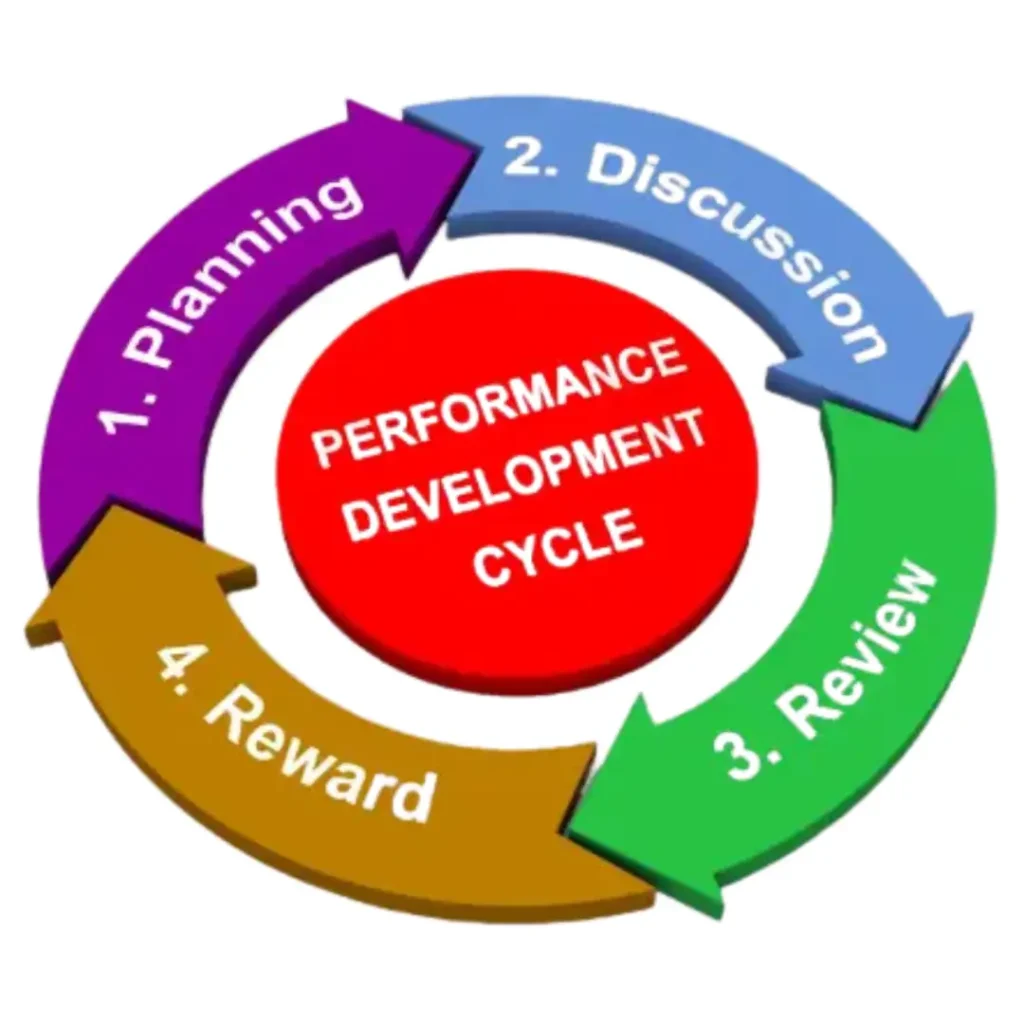
It moves companies away from the “annual review” mindset and introduces Continuous Performance Management (CPM). These cloud-based platforms centralize goal setting (such as KPIs and OKRs), facilitate 360-degree feedback, track progress in real-time, and provide actionable analytics for HR and leadership teams.
Core Features of a Top-Tier Performance Management System in Dubai
Not all HR software is created equal. A generic platform designed for a different market may lack the nuances required for the Middle East. When evaluating vendors, ensure the platform includes the following essential features:
1. Goal Tracking: KPIs and OKRs
Your system must allow leadership to cascade company-wide goals down to departmental and individual levels.
- KPIs (Key Performance Indicators): For tracking standard, ongoing metrics (e.g., a sales executive’s monthly revenue target).
- OKRs (Objectives and Key Results): For tracking ambitious, growth-oriented goals.
The software should provide visual dashboards so employees can see their progress in real-time.
2. Continuous Feedback and Check-Ins
The best systems facilitate weekly or monthly 1-on-1 check-ins between managers and direct reports. It should allow both parties to log meeting notes, set action items, and request micro-feedback. This ensures that by the time a formal appraisal happens, there are no surprises.
3. 360-Degree Appraisals
In Dubai’s collaborative corporate environments, a manager’s viewpoint is not enough. A robust system automates 360-degree reviews, allowing employees to receive anonymous, constructive feedback from their peers, subordinates, and even external clients. This provides a holistic view of an employee’s soft skills, teamwork, and leadership potential.
4. Multi-Language Support
While English is the lingua franca of Dubai’s business sector, a significant portion of the workforce (and government interfaces) operates in Arabic. A system that offers an Arabic user interface or bilingual forms ensures high adoption rates across all levels of the organization.
5. Customizable Workflows
A software development team in Dubai Media City is evaluated differently than a retail sales team in Dubai Mall. Your software must allow HR to create customized appraisal templates, weighting systems, and review cycles (e.g., quarterly for sales, bi-annually for administration) based on the department.
6. Integration with Core HRIS and Payroll
Performance ratings directly impact compensation. Your appraisal software must seamlessly integrate with your central Human Resources Information System (HRIS) and payroll software to automate salary increments and bonus payouts, ensuring compliance with the UAE’s Wage Protection System (WPS).
7. Advanced Analytics and 9-Box Grid Mapping
Data is useless if it cannot be interpreted. The system should automatically plot employees on a 9-Box Grid, measuring “Performance vs. Potential.” This allows HR leaders to instantly identify their top talent (future leaders ready for promotion) and underperformers (who may need Performance Improvement Plans).
Comparing Manual vs. Automated Appraisals
To help build a business case for your stakeholders, here is a clear comparison of how automation transforms the HR landscape:
| Feature | Manual / Spreadsheet Appraisals | Automated Performance Management System |
|---|---|---|
| Frequency | Once or twice a year | Continuous, real-time feedback & regular check-ins |
| Time Investment | High (weeks of chasing managers and data entry) | Low (automated reminders, auto-aggregated data) |
| Goal Visibility | Hidden in personal folders; rarely reviewed | Transparent dashboards; aligned with company OKRs |
| Bias Level | High (subject to recency and personal bias) | Low (data-driven, supported by 360-degree peer feedback) |
| Data Security | Low (email attachments, unencrypted files) | High (Cloud-based, role-based access control, encrypted) |
| Analytics | Manual compilation required; error-prone | Instant, real-time dashboards and 9-Box Grid talent mapping |
How Appraisal Automation Drives ROI in the UAE
Investing in a digital HR ecosystem requires capital, but the Return on Investment (ROI) is substantial and rapid.
1. Drastic Reduction in Employee Turnover
Dubai’s job market is highly fluid. Employees who feel their hard work is unrecognized, or their career path is stagnant, will leave for a competitor. Continuous performance management fosters engagement. Recognizing achievements in real-time drastically improves employee satisfaction and retention, saving companies thousands of dirhams in recruitment and onboarding costs.
2. Increased Productivity Through Goal Alignment
When an employee clearly understands how their specific output impacts the company’s bottom line, their engagement skyrockets. Automated systems keep these goals front and center, preventing employees from drifting into busywork that does not drive the business forward.
3. Fair and Defensible Compensation Decisions
Disputes over bonuses and promotions are common in the corporate world. An automated system provides an objective, data-backed paper trail of an employee’s performance throughout the year. This protects the company and ensures that merit-based rewards are distributed fairly.
4. Identifying Skill Gaps for Targeted Training
Instead of guessing what training your staff needs, the analytics provided by an appraisal system will highlight exactly where a department is falling short. You can then allocate your corporate training budget effectively, ensuring maximum impact.
Navigating Cultural Nuances in Middle Eastern Workplaces
Implementing a feedback-heavy system requires cultural sensitivity. In the Middle East, business culture often places a high value on hierarchy, respect, and saving face.
Direct, blunt criticism can sometimes be perceived poorly. An automated system helps bridge this cultural gap by:
- Standardizing the criteria for evaluations, making feedback objective rather than personal.
- Encouraging a focus on “future growth” rather than “past failures” through structured OKRs.
- Allowing for structured, private, and constructive feedback channels that respect organizational hierarchies while still promoting transparency.
Selecting the Right Vendor: Spotlight on Workplus.ai
When you are ready to modernize your HR operations, it is imperative to choose a software partner that understands the specific demands of the Middle Eastern market. You need a platform that is scalable, highly secure, and intuitive for both managers and employees.
Step-by-Step Implementation Guide for UAE Enterprises
Purchasing the software is only the first step. To ensure successful adoption across your Dubai office, follow this implementation roadmap:
- Audit Your Current Process: Define what is failing. Are your KPIs outdated? Is the feedback loop broken?
- Define Your Performance Philosophy: Decide if you want to use OKRs, KPIs, or a hybrid. Determine how often reviews will take place (e.g., quarterly check-ins with an annual major review).
- Secure Executive Buy-In: Leadership must champion the new software. If the CEO and Directors are not using the system to set their own goals, the rest of the company will not adopt it.
- Train the Managers First: Managers are the linchpin of performance management. Train them not just on how to click the buttons in the software, but on how to deliver constructive, continuous feedback.
- Launch with a Pilot Group: Roll the software out to a single department (like IT or Marketing) to iron out any workflow kinks before launching company-wide.
- Continuous Monitoring: Use the system’s analytics to track adoption rates. If a specific department is ignoring their weekly check-ins, HR can intervene proactively.
Frequently Asked Questions (FAQs)
Yes. A Human Resources Information System (HRIS) is the core database for employee records, payroll, leave management, and basic attendance. A Performance Management System is specialized software focused entirely on talent development, goal tracking, and evaluations. The best practice is to integrate the two.
Absolutely. In fact, it is essential for remote or hybrid teams. Because managers cannot visually monitor remote staff, performance software shifts the focus from “hours worked” to “outcomes achieved” by tracking specific KPIs and OKRs.
They are highly effective if implemented correctly. To succeed in the UAE, 360-degree reviews should initially be used strictly for developmental purposes (coaching and growth) rather than directly tying peer feedback to salary reductions, which can breed mistrust.
Retaining UAE National talent is a top priority for private sector companies. A robust performance system ensures that Emirati employees receive clear career progression paths, regular mentorship, and objective feedback, leading to higher job satisfaction and lower turnover rates.
Depending on the size of your organization and the complexity of your custom workflows, implementation can take anywhere from 3 to 8 weeks. Choosing a vendor with strong local support in the UAE will drastically reduce onboarding time.
Conclusion
In Dubai’s fiercely competitive landscape, your people are your greatest asset. Clinging to manual, once-a-year performance reviews is a disservice to your talent and a barrier to your company’s growth.
By implementing an automated Performance Management System in Dubai, you eradicate administrative fatigue, eliminate evaluation bias, and align every single employee with your strategic business goals.
The result is a highly engaged, highly productive workforce ready to propel your company forward in the dynamic UAE market. Do not let outdated HR processes hold you back embrace automation and unlock your team’s full potential today.